Learn more about the faculty members who will be leading Arrive Ready programming this summer.

Paul He, Arrive Ready to Study Computer Science
Welcome to U of T! I’m Paul, an Assistant Professor, Teaching Stream since 2024 and am the course coordinator for CSC110 and CSC111, the first-year courses for students in the Computer Science admission category.
Learn more about Professor He
Before coming to U of T, I did my PhD at the University of Pennsylvania, where I worked in the area of programming language theory and learned that I love teaching. Before that, I did my bachelor’s at the University of Waterloo in CS, and before that, I grew up right here in Toronto. This year, in addition to teaching CSC110 and CSC111, I’ll also be the CMP1 Faculty Advisor, which means I’ll be available if you want to talk about your first-year experience — all aspects of your experience, not just academics. Outside work, I like rock climbing and exploring the city on my bike. I look forward to seeing you on campus! You can find out more about me on my website.

John Rogers, Arrive Ready to Study Humanities
Having taught for three decades at Yale University in the U.S., I moved to Canada three years ago, thrilled with the opportunity to teach the amazing students at U of T. My academic field of specialization is Renaissance English literature and I regularly teach the work of John Milton, author of the epic poem Paradise Lost. Currently, though, I have the honour of teaching the course Literary Traditions, which introduces some of the great classics of world literature to first-year students.
Learn more about Professor Rogers
Favourite thing about teaching: Nothing is more exciting than teaching a work of literature that shocks and delights students with its mystery and beauty. If my students aren’t blown away by the surprising genius of a great work of literature, then I know I haven’t taught it right.
What can students expect from Arrive Ready to Study Humanities: You’ll get a sense of how it feels and what it means, to be baffled by a work of writing and you’ll come away with some strategies for converting that unsettling experience of confusion into a higher state of understanding.
Top tip for new students: Allow yourself to take pleasure in ideas and problems you don’t fully understand.
Outside the classroom: Current interests include (in no particular order) running, coffee and revisiting the masterpieces of ’40s and ’50s film noir.
Favourite thing about U of T: The university’s exhilarating location smack-dab in the middle of one of the world’s great cities.
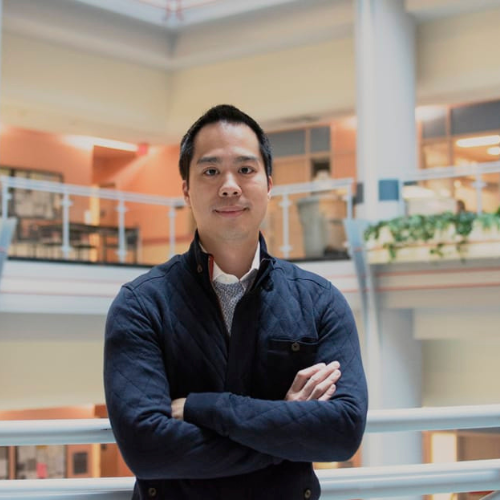
Kenneth Yip, Arrive Ready to Study Life Sciences
I’ve been teaching with the Department of Cell & Systems Biology at the University of Toronto since 2010. Students will typically see me in first and/or second year, as I teach the large undergraduate biology classes. I also run a cancer research team at the Princess Margaret Cancer Centre, University Health Network and am the Scientific Director of Anticancer.ca.
Learn more about Professor Yip
Favourite thing about teaching: I enjoy discussing how human health is impacted by alterations in fundamental biological mechanisms.
What can students expect from your Arrive Ready module? This year, the theme is cancer — something that will unfortunately affect everyone’s life in one way or another. We’ll review basic cellular and molecular biology, discuss how these basic processes are altered in cancer cells and learn about practical everyday changes that can help decrease our cancer risk.
Top tip for new students: Put in your best effort to meet new people and expand your social circle. Learn from the diverse range of perspectives, backgrounds and cultures.
Outside the classroom: I’m a huge Formula 1 fan.
Favourite thing about U of T: Toronto. I hope students can find time to enjoy the city!
For more information, visit kennethwyip.com.
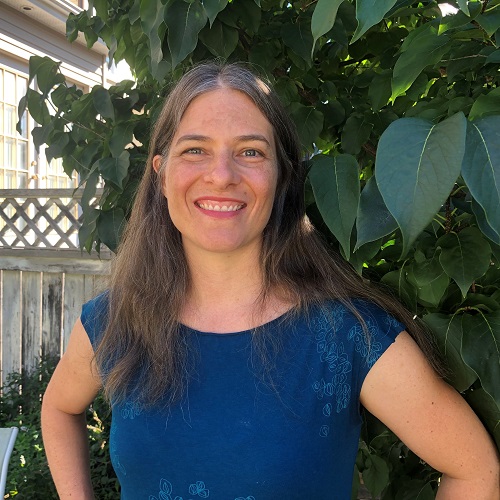
Kristine Quinlan, Arrive Ready to Study Life Sciences (Chemistry)
I have been a faculty member in the Department of Chemistry for over 15 years and I teach the large first-year course for Life Science students, CHM 135 and CHM 136. Over 20,000 students have attended my classes, a number that I find both humbling and inspiring!
Learn more about Professor Quinlan
Favourite thing about teaching: I love teaching incoming first-year students and being part of their transition to learning at the University of Toronto. There is such energy and enthusiasm in the CHM 135 and CHM 136 classes and I feel honoured to be a part of their first courses here.
In terms of teaching chemistry, my favourite part is making connections to our everyday lives. Chemistry is truly everywhere and it is fun and rewarding to get a deeper understanding of phenomena we see routinely.
What can students expect from your Arrive Ready module? The Chemistry part of Arrive Ready to Study Life Science is designed to address any gaps in prior knowledge in the high school math and chemistry topics that are essential for the first-year chemistry courses. Having a solid grounding in these ideas will allow you to focus on the new chemistry we will be learning in CHM 135 and CHM 136 and help with the transition to learning chemistry at the university level.
Top tip for new students: Over your undergraduate years, you have the opportunity to grow so much as a person, intellectually, socially and emotionally, but this requires getting out of your comfort zone. Embrace the opportunities at U of T! Be open to the learning! Find your community on campus!
Outside the classroom: My partner, an evolutionary geneticist, and I have two kids (15 and 18 years old). We enjoy travelling as a family, playing board games and exploring the diverse and excellent restaurants in Toronto. We are also animal-lovers and our household includes a dog, two toads, a gecko and a corn snake. I also spent a few hours every week in the pottery studio, throwing cups, bowls and teapots. Art, of some form, has been an important part of my life since high school and is important to my wellbeing.
Favourite thing about U of T: Without a doubt, my favourite thing at U of T is the people. I love working with my colleagues, both faculty and staff, to make learning chemistry engaging for students and to introduce incoming students to life at U of T. Teaching has been a passion of mine since graduate school and working with students, in class, during student hours and one-on-one is the highlight of my job. While U of T is a large university, there are wonderful smaller communities on campus.
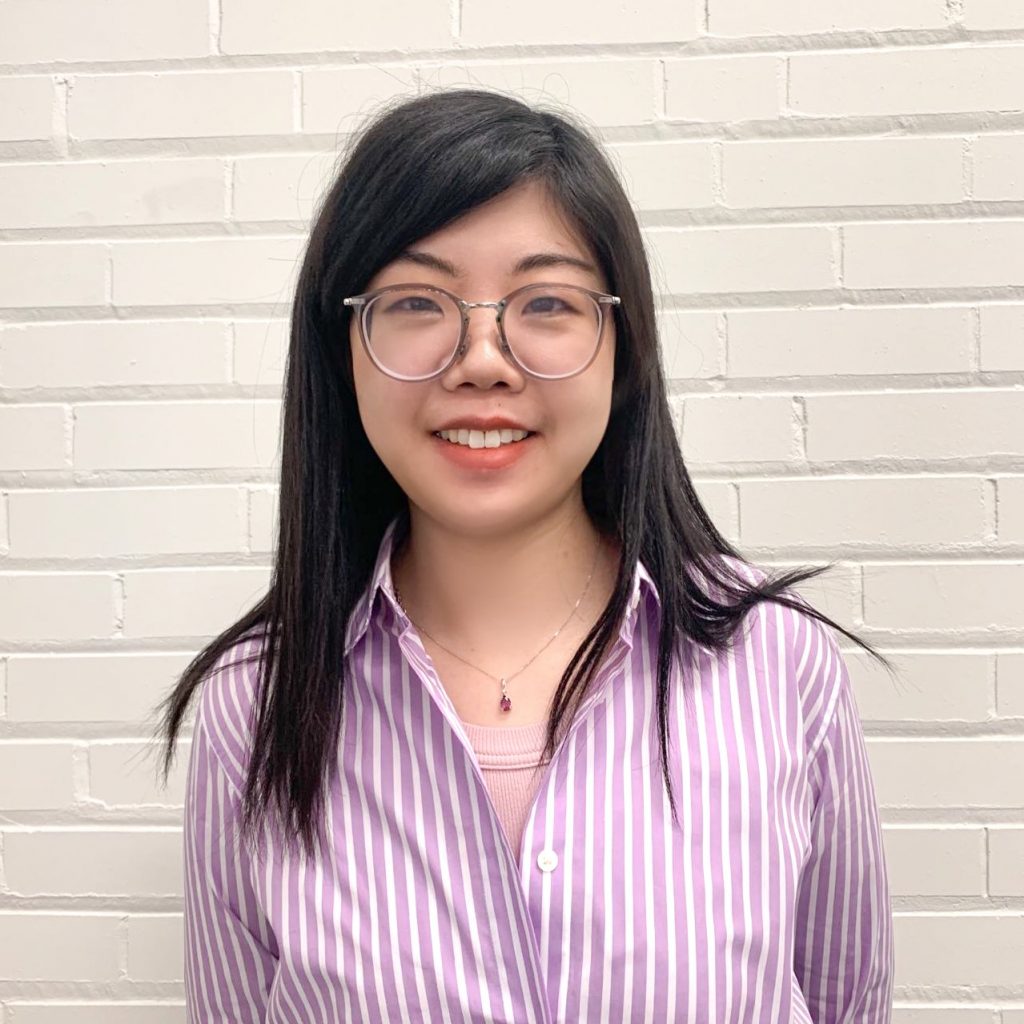
Xiaoyue Cui, Arrive Ready to Study Mathematics
Welcome! I have been teaching within the Department of Mathematics at U of T since January 2021. Prior to that, I served as an Educator Assistant Professor at University of Cincinnati from 2016 to 2020. Currently, I am responsible for instructing and coordinating the comprehensive first-year calculus course, MAT137, which caters to students majoring in mathematics, statistics, physics and computer science. In addition, I am involved in teaching various second-year mathematics courses, such as ordinary differential equations, as well as third-year courses like partial differential equations.
Learn more about Professor Cui
Favourite thing about teaching: I have a deep passion for guiding students through the intricacies of mathematical problem-solving and reasoning. As an educator in mathematics, what I truly enjoy is witnessing students effectively communicate their understanding using precise mathematical proof language, as well as observing them learn from their peers through engaging discussions. It brings me great joy to foster an environment where students can develop their mathematical skills and grow as critical thinkers.
What can students expect from your Arrive Ready module? This year, the emphasis of the Arrive Ready to Study Mathematics module will be placed on equipping students with essential skills in note-taking, annotating texts, comprehending proofs and honing their proficiency in crafting concise and effective proofs. The module will provide comprehensive guidance on strategies for efficient note-taking, critical reading of mathematical proofs and ample opportunities for hands-on practice in constructing and presenting simple proofs.
Top tip for new students: One valuable piece of advice is to make connections and form friendships with fellow students during your time at U of T. The university community comprises a diverse range of individuals, and interacting with them presents an excellent opportunity to broaden your horizons and gain knowledge from various perspectives. By building meaningful relationships with your peers, you can foster a supportive network that will enhance your overall university experience.
Outside the classroom: In my free time, I like to engage in activities that are both therapeutic and entertaining, such as solving puzzles and creating art through painting. These pastimes allow me to unwind and decompress from the stressors of everyday life. Additionally, I have a talent for cooking, which has earned me a reputation among my friends as a skilled culinary artist.
Favourite thing about U of T: I feel immensely grateful to be part of this amazing community, working alongside my wonderful colleagues, who inspire and motivate me every day. Equally, I take great pride in my students, who comprise the vibrant and diverse U of T learning community. Witnessing their growth and achievements fills me with a profound sense of accomplishment and reinforces my passion for teaching.

Kripa Freitas, Arrive Ready to Study Rotman Commerce and Arrive Ready to Study Economics
I’ve been at U of T since 2011. What drew me to economics was simple: it’s about people. The decisions they make, big and small, and the idea that behaviour changes when incentives change. Human behaviour is fascinating, and economics turns out to be a surprisingly powerful lens for understanding it. I’m currently teaching the large first-year course ECO101, Principles of Microeconomics, and ECO206, Microeconomic Theory, aimed at students heading down the specialist path. Looking forward to meeting you!
Learn more about Professor Freitas
Favourite thing about teaching: The students. Every class I get to meet new students wrestling with the same ideas, but always bringing something new to them. That’s genuinely energizing and I get to learn something from my students every time.
What can students expect from your Arrive Ready module? A preview — a trailer, as it were — for your first-year classes. The hardest part of any big transition is the not knowing part. The module aims to take the edge off that. Just a little, because the unknown is where all the good stuff lives, and we’re just here to make sure you walk in the door ready to find it.
Top tip for new students: Be relentlessly, shamelessly curious. A university education is about a lot of things, but at its heart, it is about learning and people. Learning about a subject and about yourself while surrounded by people with different experiences and points of view. Curiosity fuels all of that, gets you through the hard parts and has a way of opening up futures you hadn’t even thought to imagine.
Outside the classroom: A love of reading and a bad habit of acquiring new interests that must be explored completely means you’ll usually find me with a book or listening to an audiobook while walking my dog.
Favourite thing about U of T: The combination of its size and people. There’s always something new to discover on campus, someone interesting to connect with or an event to attend.
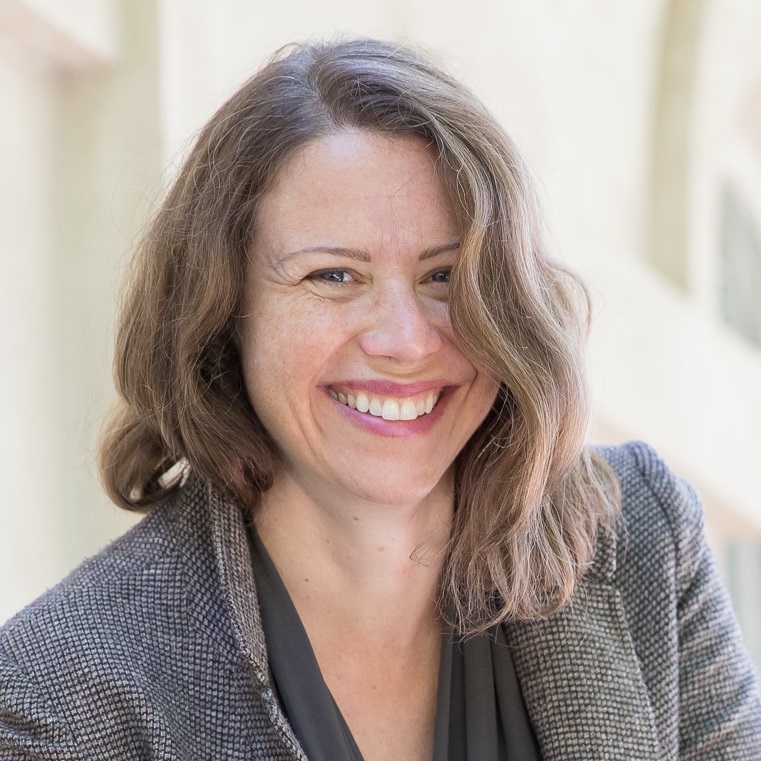
Sarah Wakefield, Arrive Ready to Study Social Sciences
I started teaching in the University of Toronto’s Department of Geography and Planning in 2002 – almost 20 years ago! I was trained as a health geographer and still teach in that area and engage with that academic community. However, my main interest is activism: understanding how individuals and organizations work together to create just, healthy and sustainable communities; what motivates activist work, what sustains it and how it can be most effective.
Learn more about Professor Wakefield
Not surprisingly, this leads into all kinds of interesting questions about engagement, inclusion and justice. My current research explores activism in relation to two topics – food systems and neighbourhood-level community development. In this work, I draw on a range of theoretical perspectives and use a number of different qualitative and quantitative methods to explore my areas of interest. Most of my research involves partnerships with activist groups, community organizations and policy-makers, in order to maximize the usefulness of my work as a tool for social and political change. I teach courses with a wide range of topics, including food systems, medical/health geography and climate change.
Favourite thing about teaching geography: No discipline is as broad as geography! You can study anything and everything through a geographic lens and can combine science, social science and humanities approaches to explore your topic.
Top tip for new students: Don’t be afraid to get connected. U of T can feel like a giant place but it has SO much to offer if you make an effort to get involved and aren’t afraid to ask people – including your instructors – how to get the most out of your experience.
Outside the classroom: I enjoy gardening, habitat restoration, hiking and cycling.
Favourite thing about U of T: Exploring the old buildings – there’s always something new fabulous space to find! University College, Hart House and Knox College are a few of my favorites. And all the great students of course.